

Bullet-Resistant Acrylic Glazing
(Also Called Acrylic Bullet-Resistant Glass or Acrylic Bulletproof Glass)
In security applications, specialized acrylic glazing—often called bullet-resistant acrylic—can provide tested ballistic protection when engineered to meet specific threat levels.
Bullet-resistant acrylic is one of the most widely used interior ballistic glazing materials because it combines excellent light transmission, optical clarity, and reliable handgun protection. This single-layer glazing allows natural light to pass through while maintaining a secure barrier. When paired with a coating for abrasion resistance, acrylic glazing also gains improved durability against scratching, solvents, and everyday wear.
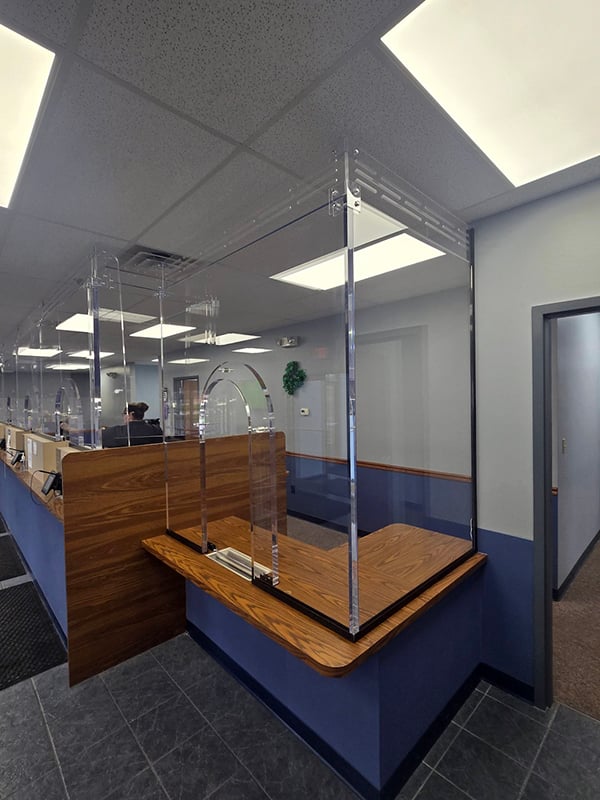


Polycarbonate & Laminated Polycarbonate Glazing
(Also Called Bulletproof Laminated Polycarbonate Glass or Bullet-Resistant Polycarbonate Glass)
Ballistic polycarbonate is a durable security glazing designed to absorb and disperse energy rather than shatter on impact. Its layered construction allows it to catch and slow a bullet while reducing dangerous ricochet or fragmentation. This flexibility also gives polycarbonate bullet-resistant glass exceptional resistance to blunt-force attacks, allowing it to withstand repeated strikes from tools like sledgehammers.
Compared to acrylic, polycarbonate barriers can offer comparable bullet resistance with reduced thickness and weight.
Because of its resilience, laminated polycarbonate is commonly used for interior ballistic barriers where both bullet resistance and forced-entry protection are important. Available in UL Levels 1–3, it provides reliable protection from common handgun threats while delaying intruders as part of a layered security strategy.


Glass-Clad Polycarbonate Glazing
(Also Called Bulletproof Glass-Clad Polycarbonate, Bullet-Resistant Glass-Clad Polycarbonate or Ballistic Glass-Clad Polycarbonate)
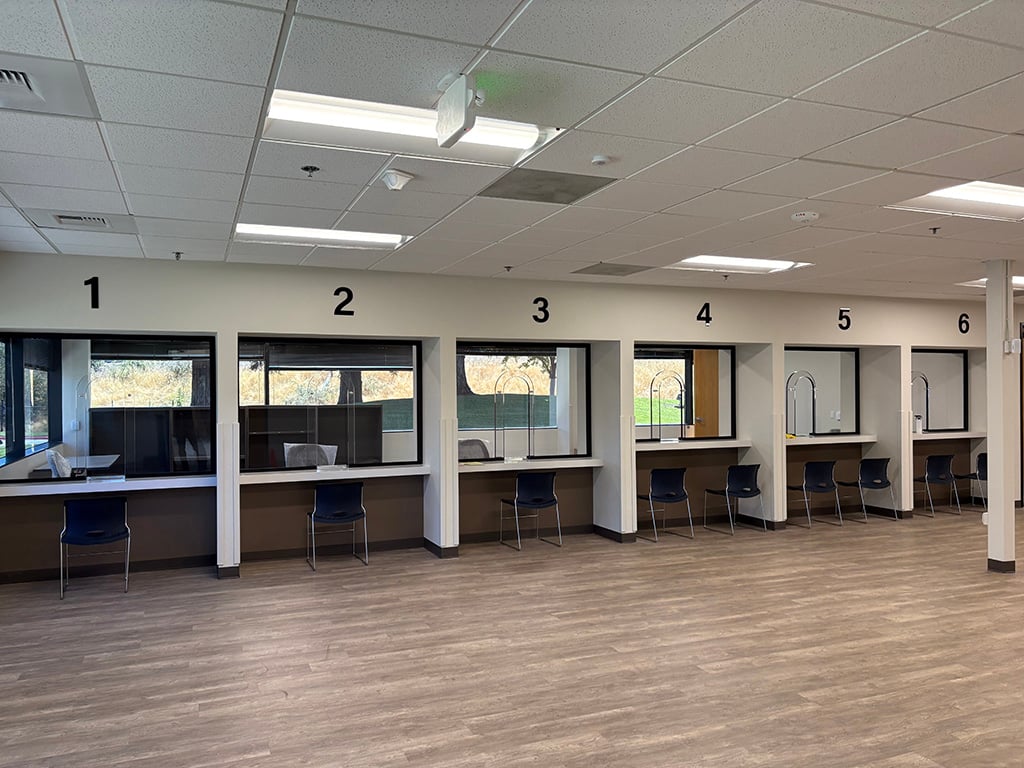
Glass-clad polycarbonate (GCP) is a high-performance bullet-resistant glazing made by laminating layers of glass and polycarbonate. The glass exterior provides a hard, scratch-resistant surface suited for high-traffic areas, while a polycarbonate layer on the secure side helps mitigate spalling by capturing fragments upon impact. This layered construction enhances ballistic performance and occupant safety compared to traditional glass-only panels.
Because of its durability and weather resistance, glass-clad polycarbonate bulletproof glass is widely used in both interior and exterior security barriers, including storefronts, entryways, and secure vestibules. Available in UL Levels 1–8, GCP offers reliable ballistic protection across a wide range of threat levels while maintaining the clean appearance expected in modern buildings.
%2c%20which%20can%20protect%20a%20buildings%20perimeter%20with%20laminated%20glass%20bonded%20together%20w.jpg?width=704&height=653&name=A%20graphic%20displaying%20insulated%20glass%20(available%20starting%20at%201%20insulated%20glass%20thickness)%2c%20which%20can%20protect%20a%20buildings%20perimeter%20with%20laminated%20glass%20bonded%20together%20w.jpg)
Insulated Glass
(Or Insulated Ballistic Glass)
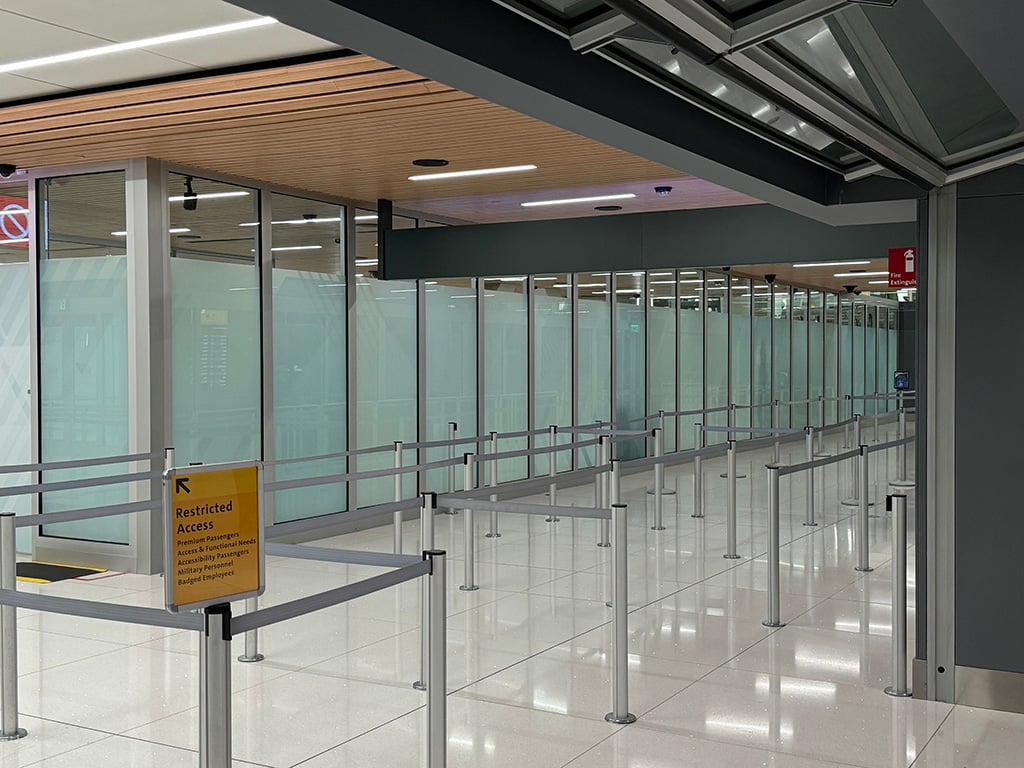
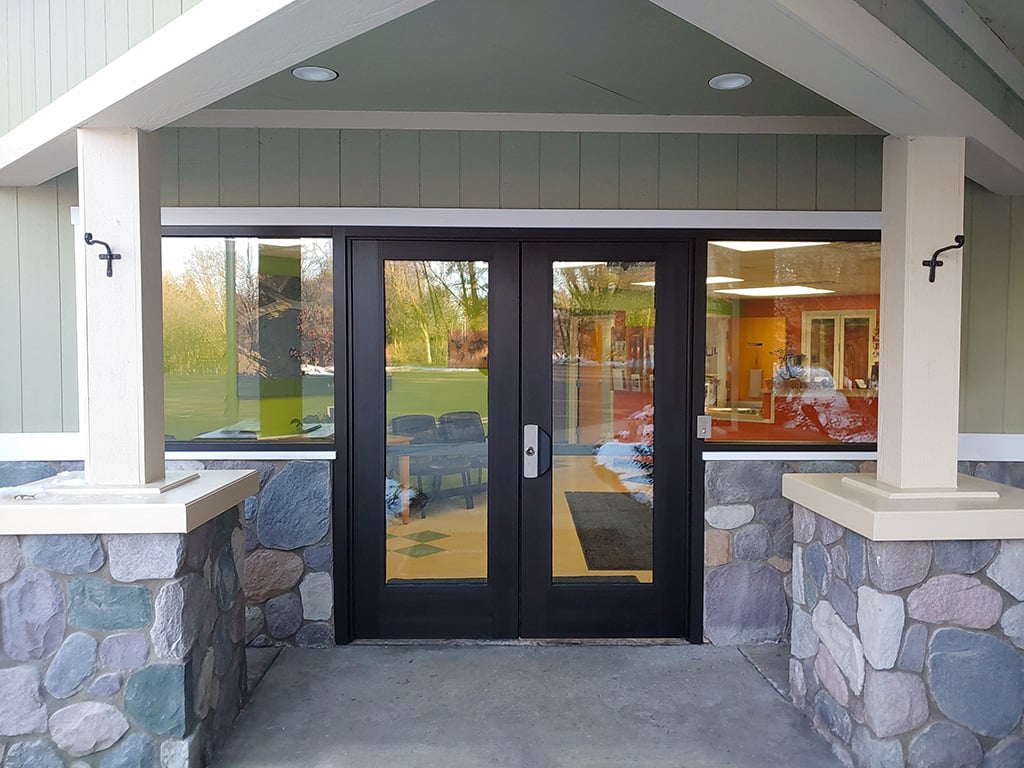
Insulated ballistic glass combines bullet-resistant protection with modern energy performance, making it ideal for securing a building’s exterior without sacrificing efficiency or appearance. The TSS DEFENDER and GCP insulated glass lines use laminated ballistic glazing separated by a sealed air space, forming an insulated glass unit that improves thermal performance while protecting occupants from ballistic threats and, in some configurations, includes forced-entry protection.
Because of this design, ballistic insulated glass is commonly used for exterior windows, storefronts, and perimeter glazing where natural light, energy efficiency, and security must work together. Available in UL Levels 1–8, these systems help protect people from threats while strengthening the building envelope—and in the lowest protection levels, can sometimes be retrofitted into existing window frames, making them a practical, cost-effective solution for renovation and security upgrades.
Product Comparison Chart: Bulletproofing for Your Critical Infrastructure & Real-World Conditions To Provide Maximum Protection
Acrylic |
Polycarbonate |
Glass-Clad Polycarbonate |
Insulated Glass |
|
|---|---|---|---|---|
| Applications | Interior Windows and Doors | Interior Windows and Doors | Interior or Exterior Windows and Doors | Exterior Applications Like Windows and Doors |
| Bulletproof Glass Thickness | 1 1/4” to 1 3/8” | 3/4” to 1 1/4” | 13/16” to 2 1/2” | 15/16” to 1 1/4” |
| UL 752 Protection Level |

|

|

|

|
| Forced-Entry Protection | No | Yes | Yes | Yes |
| Light Transmission | > 90% | 75-85% | 60-85% | 60-80% |
| Weatherability | Sensitive to ultraviolet light exposure and solvents. Abrasion-resistant coating available. |
Sensitive to UV exposure and solvents. Abrasion-resistant coating available. |
Heightened resistance to weathering and solvent damage. | Heightened resistance to weathering and solvent damage. |
BALLISTIC GLASS EDUCATION: ANSWERS TO QUESTIONS ABOUT SECURITY OPTIONS, UL 752 RATINGS & BULLET-RESISTANT GLASS COST

Ballistic Glass vs Ballistic Glazing: Is There a Difference?
Ballistic glazing, or simply glazing, is a glass industry term that encompasses all types of transparent ballistic panels. As previously mentioned, bulletproof glazing may be made up of acrylic, polycarbonate, glass, or a combination such as glass-clad polycarbonate.
Confused? Don’t worry, whether you call it bulletproof glass, bullet-resistant glazing, or ballistic glass—people will understand you’re speaking about transparent panels that stop bullets.
Bullet-Resistant vs Bulletproof vs Ballistic Glass: Which Term is Correct?
Simply put, the proper industry term is bullet-resistant glass, but the most commonly used term is bulletproof glass. Ballistics, as defined in the Collins dictionary, is actually “the study of the movement of objects that are shot or thrown through the air, such as bullets fired from a gun.” In the real world, all three terms are used interchangeably.


Bulletproof Implies That Glass is Indescructible. Is That True?
The term bulletproof glass suggests absolute protection, but no material is completely bulletproof. The more accurate term for these protective solutions is bullet-resistant.
During testing, the material is shot with a defined firearm and ammunition to confirm it can stop a certain number of rounds without allowing penetration or dangerous fragmentation. Once that tested threshold is exceeded, the material may eventually fail.
Can You Buy Ballistic Glass For Sale and Install It Yourself?
Bullet-resistant glass can sometimes be purchased as a standalone material, but most organizations work with a ballistic security provider from the start. That’s because effective protection requires a complete bullet-resistant system designed for your building, threat level, and operational needs.
A qualified provider helps evaluate your facility and design a solution where all components work together, including:
- Ballistic glazing matched to your threat profile
- Rated frames, doors, and surrounding materials that maintain the protection level
- Proper structural support and anchoring for the weight of ballistic materials
- Integration with existing architecture and security measures
Taking a systems approach to security ensures the barrier performs as intended and protects the people behind it—while maintaining the functionality and appearance of your space.


Understanding UL 752 Rating System for Bullet-Resistant Windows, Doors & More: Get the Required Protection You Need
To be considered bullet-resistant, glazing designed for use in a bulletproof system goes through a series of tests to evaluate its ability to stop various ballistic attacks. The Underwriters Laboratories (UL) publishes the UL 752 Standard for Safety Bullet-Resisting Equipment—one of the longest-standing and most nuanced rating systems. The 10 bullet-resistance levels of UL 752 are considered the “gold standard” in the industry and describe grades of ballistic resistance encompassing weapon calibers ranging from a 9mm handgun up to a .50 caliber rifle.
UL-rated materials are favored (or, in many cases, mandatory) in building construction. All TSS ballistic products have been rigorously tested by independent, third-party safety testing labs to ensure they perform up to, and typically beyond, the UL 752 standard.
The Most Common Level of Ballistic-Resistant Glass Used Is Level 3
Level 3 bulletproof glass has become the most common ballistic glazing option because it protects against the threats most organizations are realistically planning for. Under the UL 752 standard, Levels 1–3 are designed to stop multiple shots from common handguns—the firearms most frequently used in crimes, workplace violence, and other security incidents.
Rather than designing for the most extreme scenario, many facilities prioritize protection from the most likely risks. Level 3 glazing supports that approach because it can:
- Protect people from common handgun threats while avoiding the cost and structural requirements of higher rifle-rated systems
- Blend into everyday spaces like reception areas, storefronts, and conference rooms without disrupting the design
- Support layered security strategies, delaying intruders and buying valuable time for occupants and first responders
- Adapt to both retrofit projects and new construction, making it a practical upgrade for many types of facilities

Choosing the Right Product, From Bulletproof Windows & Doors for Ballistic Resistance to Forced-Entry Resistance
Bulletproof glass offers unlimited customization options. From level of protection to tinting to spalling, it's important to know what you need to make the right choice for your situation. We know how complex (and overwhelming) the sheer number of options can be, which is why we created the Ballistic Glazing Solutions Guide. This free, comprehensive ebook provides no-nonsense information and tips to help you identify the right bulletproof glass for effective protection, whether you're working on your first bulletproofing project or your fiftieth.

BULLETPROOF GLASS WINDOWS OR SECURITY WINDOW FILM: WHICH STOPS BULLETS?
Security window film is often proposed as a less expensive, quick “bulletproof” solution for businesses interested in enhancing security on a smaller budget. However, security window film is not a ballistically-rated material and will not stop bullets from small-caliber handguns or larger caliber rifles.
In many facilities, security film is used on lower-risk exterior windows to slow intruders, while bullet-resistant glass is installed in entryways, reception areas, or other high-traffic spaces where people need direct ballistic protection.
Your threat level and unique security concerns should always determine what security solutions are right for your business, office, or facility. We created a free guide to help you understand the differences between bullet-resistant glass and security window film and enable you to make the most informed decisions about your building's physical security.

Why Choose TSS as Your Custom Security Solutions Provider For Bullet-Resistant Solutions
When you choose TSS, you’re choosing a company with decades of experience consulting, designing, fabricating, and installing ballistic barriers around the country. We have worked with countless industries and specialize in adding Safety + Aesthetics features to any space. If you’re looking for support for your bulletproofing project to meet specific security requirements, TSS is your end-to-end partner.

Consulting
If you know you need to add a layer of bulletproof material to your space, but you don’t know where to start, call us. Our security experts can help you make a practical plan for increasing your security in crucial locations.

Custom Design
Bulletproof barriers should fit seamlessly into your space. Our design capabilities make sure you get the perfect fit every time—even when you need to accommodate historical millwork, create a mantrap, or some other custom considerations like curved panels.

In-House Fabrication
As a leading manufacturer, all of our products are fabricated in-house by expert craftsmen. Nothing is off the shelf—ever. This results in a superior product that’s perfect for you and your needs, across every square foot.

Expert Installation
Once fabrication is complete, our in-house team of installation providers is ready to travel to your location to guarantee the product is installed correctly. Additionally, we ensure your business’s continuity by completing installations overnight.
As An Industry Leader, We Engineer Confidence
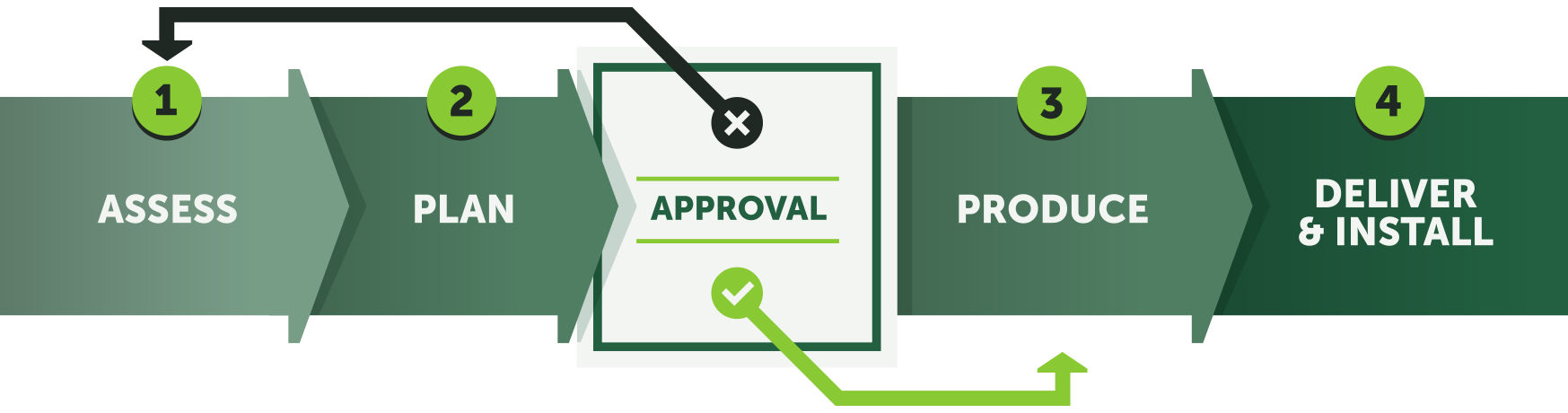
Unlike competitors who sell off-the-shelf products, we design, build, deliver, and install custom bullet-resistant barrier systems that are right the first time. Our Proven Process includes comprehensive project management to ensure your security project is tailored to your exact specifications, manufactured in-house for quality control, and sometimes installed in a single day for completion in a timely manner. That means no delays, no costly change orders, and no workarounds on-site. It’s why architects, contractors, and security leaders have trusted us to protect more than 30,000 buildings in over two decades.